

MMM / Metal Magnetic Memory
Locate stress concentration in steel.
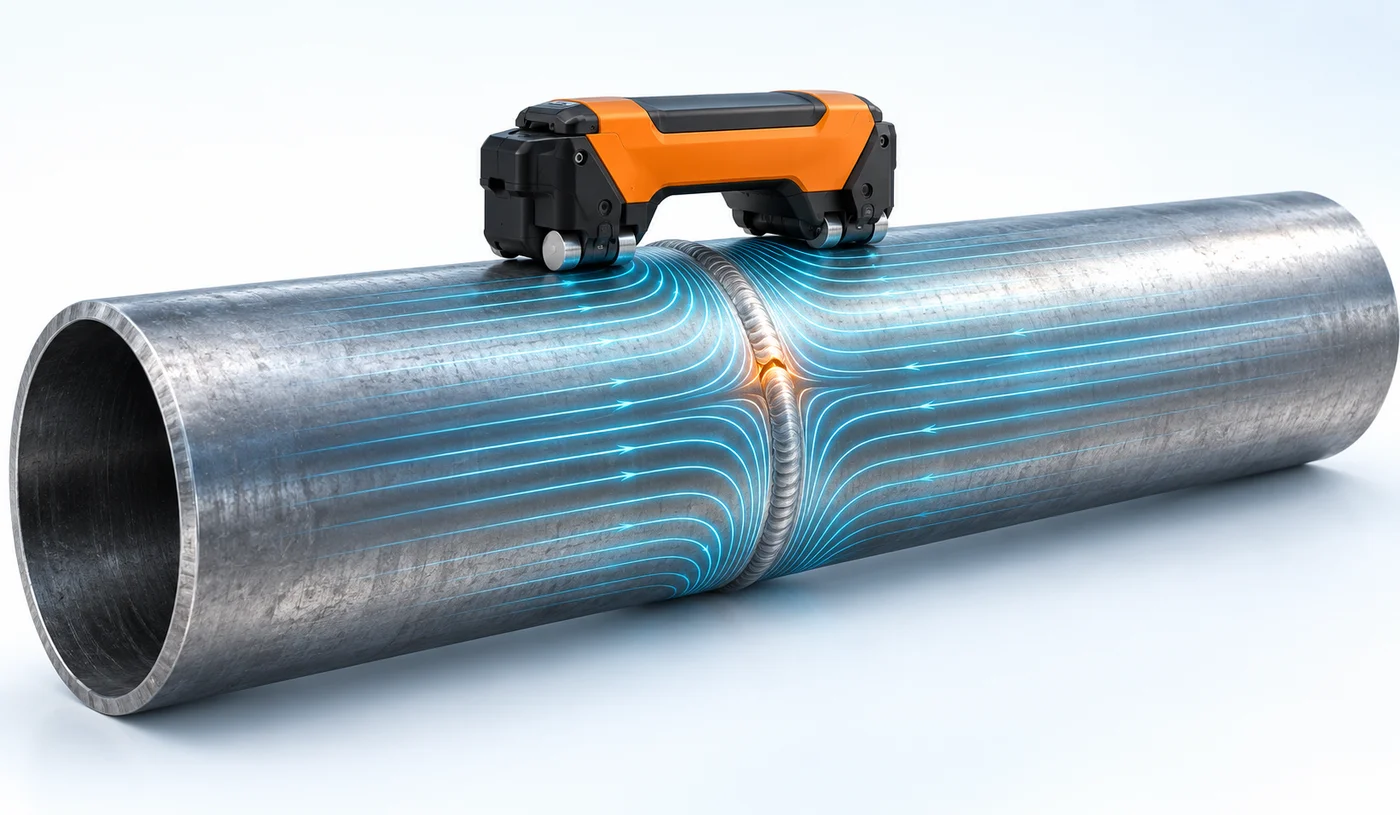
Metal Magnetic Memory maps residual magnetic fields to identify areas that warrant closer inspection.
How MMM works.
Manufacturing, welding and operating loads influence residual magnetisation in ferromagnetic steel. A scanner records magnetic-field patterns and gradients. Interpretation identifies stress concentration zones for further assessment.
Indications are interpreted in context, then used to prioritise further investigation and engineering assessment.
Typical applications
Where it can help.
Method suitability is assessed for the material, operating conditions and inspection objective.

Boilers and tubes

Pressure vessels and storage tanks

Pipelines, rotors and shafts
Suitable buried pipelines with specialist equipment
A typical survey.
A clear sequence connects the inspection objective to useful findings.
- 01
Review material and magnetic environment
- 02
Define and document scan routes
- 03
Record magnetic-field patterns
- 04
Revisit significant zones and correlate with other NDT
- 05
Report priorities for targeted verification
What you receive.
- Documented scan routes
- Magnetic-field plots
- Identified stress concentration zones
- Interpretation and stated limitations
- Targeted verification recommendations
Suitability & limitations
Understand what the evidence can tell you.
MMM is for ferromagnetic materials. It helps prioritise areas for further assessment; it does not independently confirm every crack.
Artificial magnetisation, nearby magnetic objects, external fields and welding activity can affect results. Coated and buried-pipeline applications depend on the equipment and test setup.
We agree the scope, reference basis and reporting limitations before the inspection.

Concerned about welds or fatigue-prone areas?
Start with a focused inspection objective and a suitable scope.
Discuss an MMM survey