
MRT / Magnetic Resonance Testing
Assess what coating and insulation conceal.
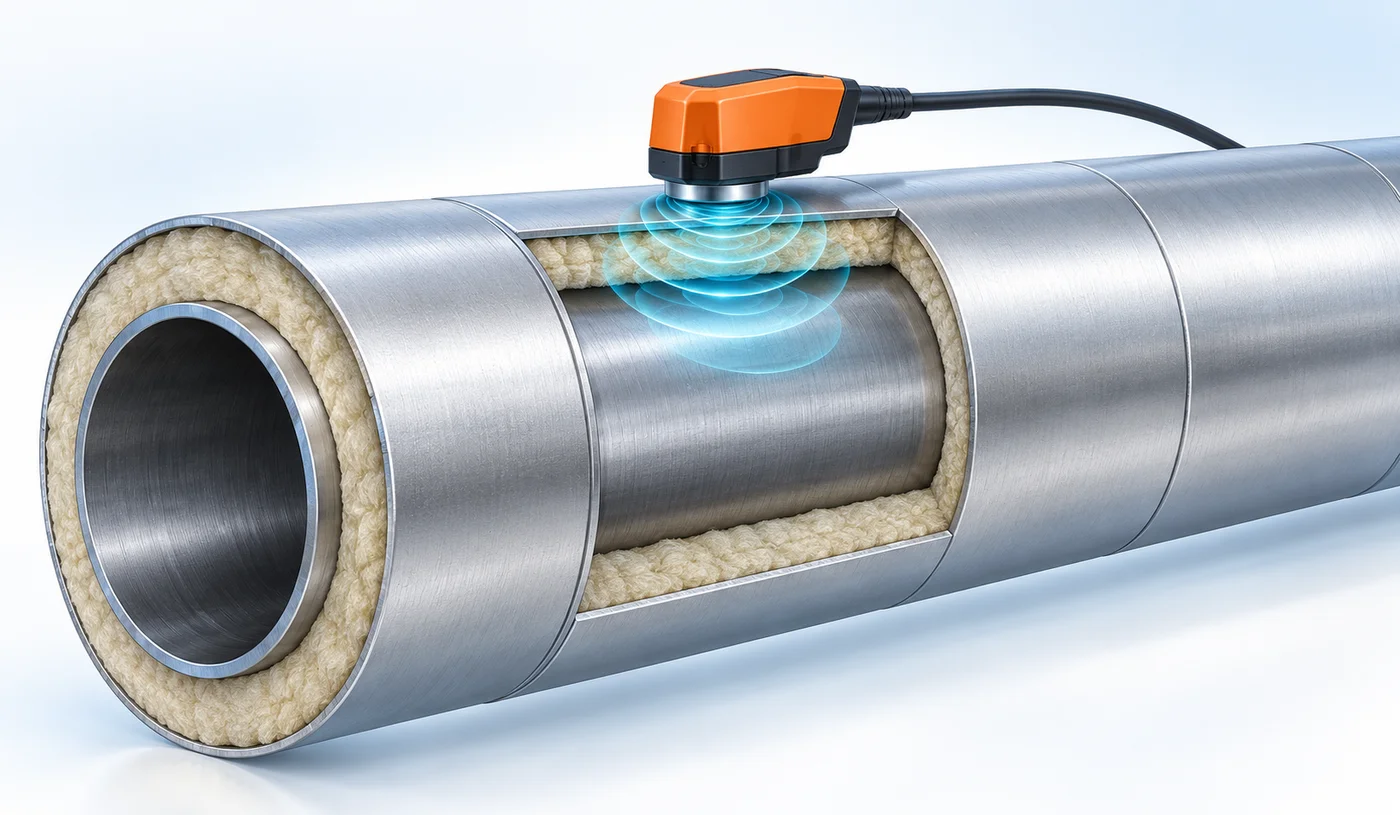
Magnetic Resonance Testing uses electromagnetic resonance response to assess suitable metal components.
How MRT works.
Excitation and receiving coils measure the component’s electromagnetic resonance response. Changes are assessed against a suitable reference and calibrated application to identify areas requiring further investigation.
Indications are interpreted in context, then used to prioritise further investigation and engineering assessment.
Typical applications
Potential applications.
Method suitability is assessed for the material, operating conditions and inspection objective.
Corrosion screening
Wall-loss or pit indications

Weld assessment
Material verification within a validated scope
Assess the application first.
A clear sequence connects the inspection objective to useful findings.
- 01
Review the asset and inspection objective
- 02
Establish reference and calibration requirements
- 03
Check material, coating, insulation and geometry
- 04
Conduct a focused application pilot
- 05
Interpret results and plan corroborating inspection
What you receive.
- Defined scan and assessment scope
- Documented reference basis
- Indication locations
- Interpretation and application limitations
- Recommendations for verification
Suitability & limitations
Understand what the evidence can tell you.
Suitability depends on the material, geometry, coating, insulation, access and validated test capability. A focused pilot helps establish the right approach.
Indications may require verification or further assessment. Detection and sizing capability must be established for the actual application and reference setup.
We agree the scope, reference basis and reporting limitations before the inspection.

Have coated or insulated equipment to assess?
Start with a focused inspection objective and a suitable scope.
Discuss an MRT pilot