AET / Acoustic Emission Testing
Listen for active damage.
Acoustic Emission Testing records stress waves associated with active processes in a material while it is under load.
How AET works.
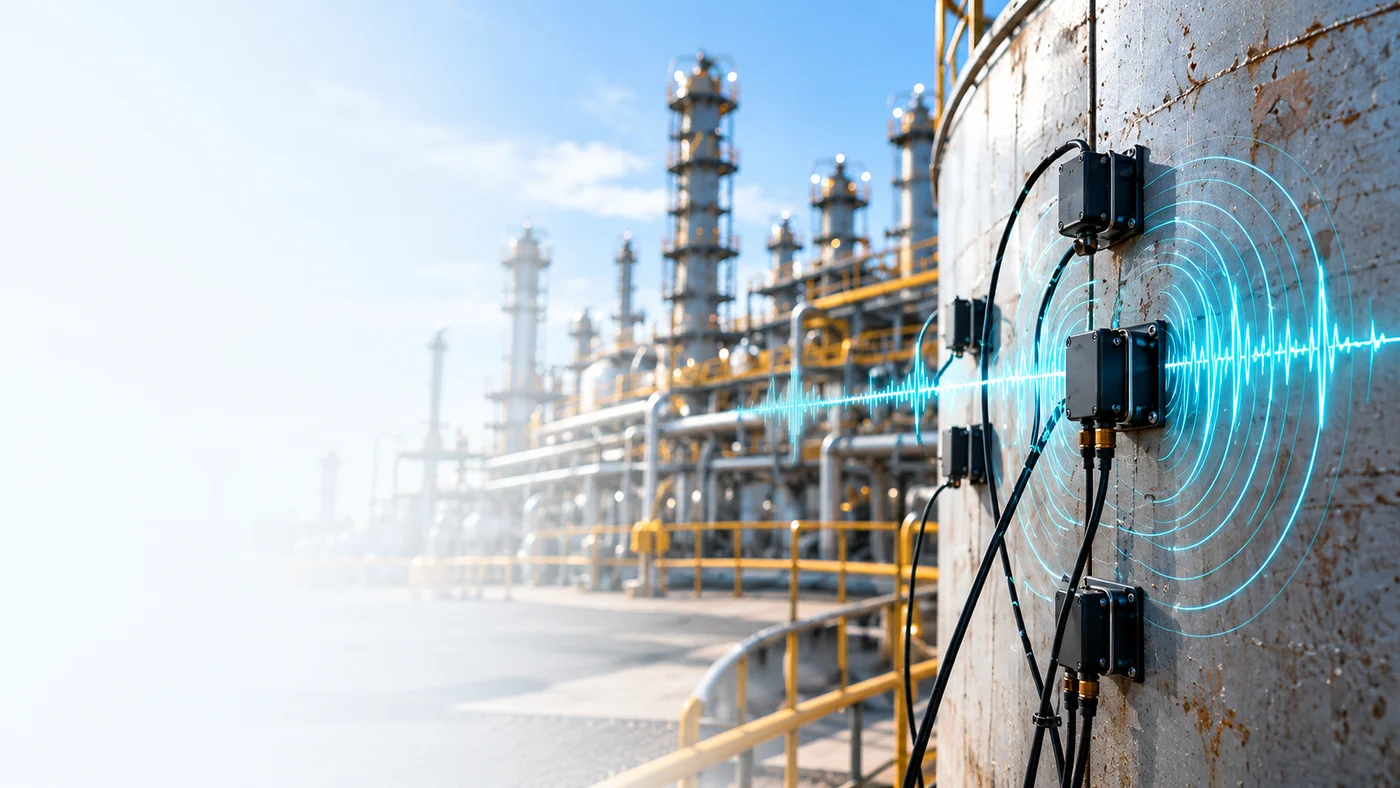
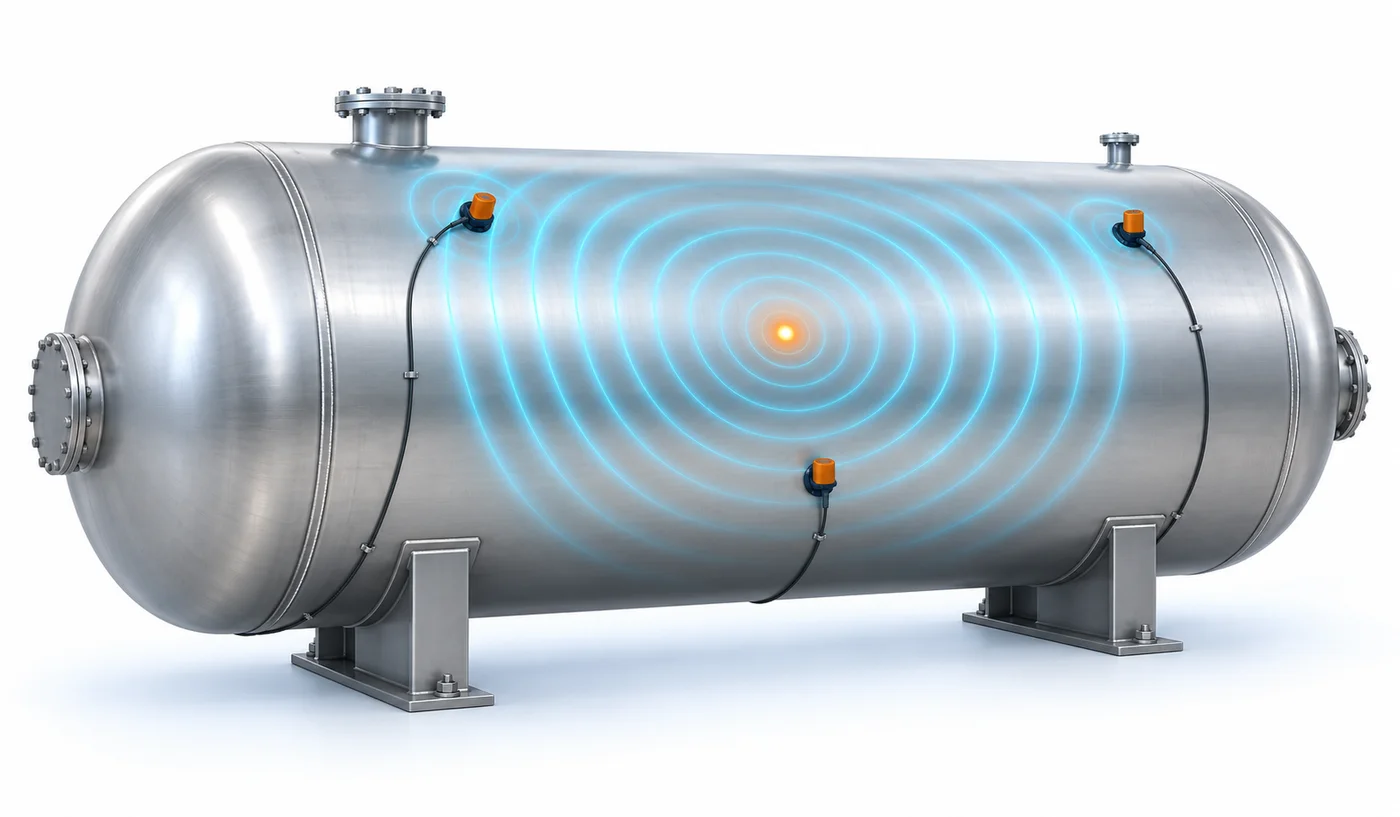
Surface-mounted sensors record acoustic signals. Differences in arrival time can help locate their source. Engineering analysis separates relevant activity from background noise, helping focus the next inspection.
Indications are interpreted in context, then used to prioritise further investigation and engineering assessment.
Typical applications
Where it can help.
Method suitability is assessed for the material, operating conditions and inspection objective.
Pressure vessels and spheres

Process and steam piping
Valves and leak detection
Suitable marine, civil and composite structures
A typical inspection.
A clear sequence connects the inspection objective to useful findings.
- 01
Review asset and operating history
- 02
Plan loading, conditioning and sensor access
- 03
Install sensors and record background noise
- 04
Acquire and analyse acoustic signals
- 05
Report activity and recommended follow-up
What you receive.
- Defined scope and sensor layout
- Recorded operating and test conditions
- Activity and source-location maps
- Interpretation and applicable grading
- Limitations and follow-up recommendations
Suitability & limitations
Understand what the evidence can tell you.
AET is useful for broad screening and monitoring of active sources. Quiet or inactive defects may not emit detectable signals. It does not directly measure universal wall thickness.
Tank testing may require isolation and conditioning; pressure-vessel testing may require controlled loading. Access, noise and operating conditions are assessed before a test.
We agree the scope, reference basis and reporting limitations before the inspection.

Have a tank, vessel or piping concern?
Start with a focused inspection objective and a suitable scope.
Discuss an AET pilot